Ancient Rome and liberalism.

It is very curious that for the last two millennia, the question of why Ancient Rome was destroyed has been almost the sole interest of historians of ideas, historians, economists and theologians in relation to Ancient Rome. There are probably over a hundred different theories! Perhaps mankind is interested in mulling over imaginary sins, or at least historians and theologians are.
But the peculiarity is that almost no one seems to be interested in the more interesting question that could teach us something, namely why was Ancient Rome born? Why did one village dwarf conquer almost the entire Western world? There were a cloudless number of similar warlike, eagerly warring pawns in the same region.
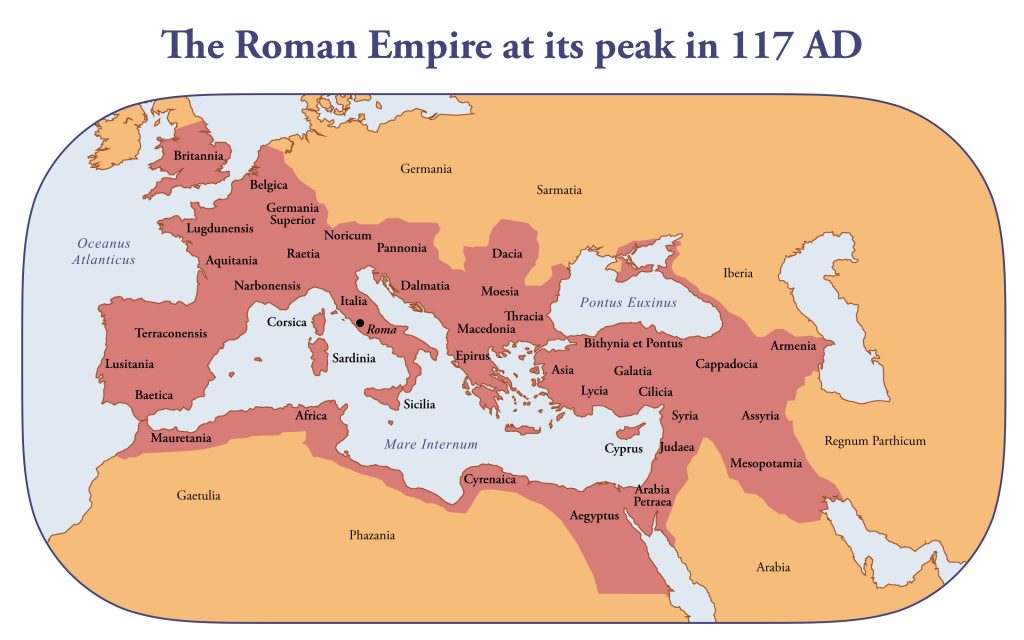
There are undoubtedly many ways to answer this question. One theory is to argue that the rise to world power was due to an intuitive adherence to the main principles of economic liberalism. Let us mention four of these principles.
First, the massive influx of different populations from outside Rome. Immigrants, workers, slaves, different cultures, different religions, etc. were integrated into Rome with astonishing efficiency and tolerance. And when there was no social security, the taste of all paid work was palatable!
Secondly, thanks to effective immigration, victorious wars and massive infrastructure projects (roads, baths, sewage systems, amphitheatres, public buildings), Ancient Rome enjoyed virtually constant economic growth.
Thirdly, the conquered territories, especially in the early days of Rome, were not subject to heavy taxes. In the early days, there was only one obligation: to produce, depending on the size of the village, a few soldiers for the Roman army. Nothing more. So no administration (which would have been too difficult to organise), no taxes and no supervising officials. In return, Rome provided military security. In modern terms, the conquered regions and cities only had to pay for 'foreign policy security'. Otherwise, they could keep what they produced.
Fourth, all Roman citizens had the opportunity to enrich themselves. (Slaves had no citizenship.) This was made possible when the plebeians and patricians settled their worst disputes. Of course, this enrichment was often done in a very immoral and unacceptable way (corruption, various wars of plunder, etc.). But other city states did not have the same opportunity, so naturally as many Romans as possible tried to take advantage of the situation.
Let it not be said that Ancient Rome is in any sense an example of what to do. But it does show that liberalism produces material prosperity.